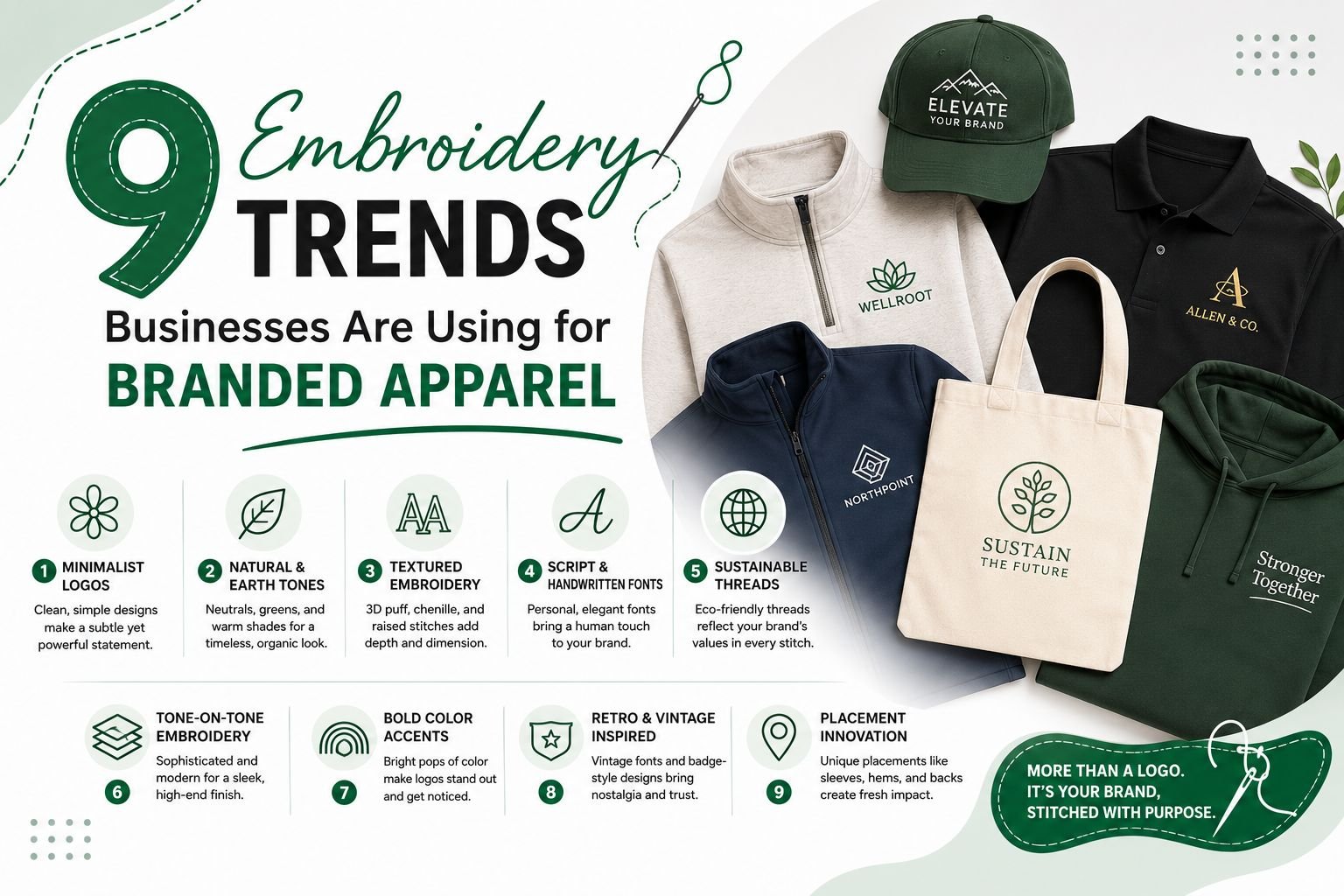
Branded apparel is changing. Businesses are moving beyond large logos and basic uniforms. Today, many brands want clothing that feels stylish, useful, and easy to wear.
That shift has made custom embroidery services a popular choice for branded apparel. Embroidery adds texture and depth while keeping branding subtle.
From minimalist logos to personalized workwear, these nine embroidery trends can help businesses create apparel people actually want to wear.
1. Minimalist Logo Embroidery
Large logos are no longer the only way to build brand recognition. Many businesses are choosing smaller, cleaner embroidered designs.
A simple logo on the left chest can look professional without feeling overly promotional.
This trend works well for:
- Polo shirts
- Sweatshirts
- Quarter-zips
- Jackets
- Button-down shirts
Minimalist embroidery is especially useful for businesses with modern or premium branding.
Why It Works
Small embroidery blends naturally into everyday clothing. Employees can wear branded pieces at work, events, or casual settings.
2. Tonal Embroidery
Tonal embroidery uses thread that closely matches the garment color. The result is subtle but still noticeable.
For example, a black hoodie with dark-gray embroidery creates a sophisticated branded look.
This approach works particularly well for:
- Luxury brands
- Creative agencies
- Restaurants
- Fitness businesses
- Fashion companies
Tonal designs are also useful when businesses want branding without a strong visual contrast.
3. Personalized Employee Apparel
Businesses are increasingly adding employee names, departments, or job titles to branded apparel.
A company logo can appear on the chest, while the employee’s name sits below it.
This approach can improve both recognition and workplace identity.
Common personalization options include:
- Employee names
- Job titles
- Department names
- Location names
- Team identifiers
Personalization is particularly useful in customer-facing industries.
4. Embroidered Workwear
Workwear has become more than functional clothing. Businesses are using embroidery to create coordinated and professional workwear collections.
Common garments include:
- Work jackets
- Utility shirts
- Vests
- Polos
- Overshirts
- Heavyweight hoodies
Durable embroidery can work well on thicker garments. It also gives workwear a more finished appearance.
Companies can combine practical fabrics with consistent branding for a unified team look.
5. Sleeve and Alternative Placement
Left-chest embroidery remains popular, but businesses are experimenting with different placements.
Sleeves, collars, pockets, and upper backs can create a more distinctive look.
For example, a company could place a small logo on the chest and a department identifier on the sleeve.
Alternative placement is useful when businesses want branded apparel to feel less repetitive.
Popular Placement Ideas
- Left chest
- Right chest
- Sleeve
- Upper back
- Pocket area
- Jacket cuff
Placement should always match the garment and design size.
6. Embroidered Hats and Headwear
Branded headwear continues to be a strong option for business merchandise.
Hats provide a compact space for logos and symbols. They are also easy to wear outside the workplace.
Popular choices include:
- Baseball caps
- Trucker hats
- Dad hats
- Beanies
- Visors
- Structured caps
Simple designs tend to work best on smaller surfaces. A short brand name or recognizable logo can create strong visual impact.
7. Premium Thread and Dimensional Effects
Businesses are also experimenting with embroidery techniques that create more visual depth.
Raised or dimensional embroidery can make certain parts of a logo stand out. Specialty threads can add another layer of visual interest.
These techniques can work well for premium merchandise and limited-edition apparel.
However, more complex embroidery can increase production costs. Businesses should balance visual impact with their budget and intended order quantity.
8. Small-Batch and Limited-Edition Collections
Businesses no longer need to produce huge apparel runs for every campaign.
Small-batch embroidered apparel allows brands to test new designs without committing to large quantities.
Limited collections can be created for:
- Product launches
- Company anniversaries
- Seasonal campaigns
- Conferences
- Brand collaborations
- Customer appreciation
This strategy can make branded apparel feel more exclusive.
It also gives businesses an opportunity to test different designs before ordering larger quantities.
9. Lifestyle-Inspired Branded Apparel
One of the biggest shifts is making branded clothing look like regular lifestyle apparel.
Instead of creating garments that only employees would wear, brands are choosing pieces that customers might purchase themselves.
Think premium sweatshirts, fashionable jackets, caps, and quarter-zips with understated embroidery.
The goal is simple: make the apparel useful even without the logo.
When the garment looks good on its own, branding becomes an added benefit rather than the entire purpose of the product.
Comparing Today’s Embroidery Trends
| Trend | Best For | Main Benefit |
| Minimalist logos | Professional brands | Clean appearance |
| Tonal embroidery | Premium brands | Subtle branding |
| Personalized apparel | Employees | Easy identification |
| Embroidered workwear | Service businesses | Professional appearance |
| Alternative placement | Creative brands | Distinctive designs |
| Embroidered hats | Events and merchandise | High visibility |
| Dimensional effects | Premium products | Added texture |
| Limited collections | Campaigns | Exclusivity |
| Lifestyle apparel | Customer merchandise | Better everyday wear |
How to Choose the Right Embroidery Trend
Not every trend will suit every business.
Start by considering your brand identity and audience. A financial company may prefer subtle chest embroidery. A sports brand might choose larger designs and embroidered headwear.
Your budget also matters. Simple embroidery is usually easier to produce than complex, multi-location designs.
Before placing an order, consider:
- Where the apparel will be worn
- Who will wear it
- How often it will be used
- Your preferred garment type
- Logo size and complexity
- Order quantity
- Desired price point
It is also worth testing a sample before committing to a large order.
Why Embroidery Remains Popular for Branded Apparel
Embroidery offers a combination of durability, texture, and professional appearance. It can make ordinary apparel feel more substantial.
It also works across many business categories. Restaurants, technology companies, retailers, contractors, gyms, schools, and creative businesses can all use embroidered branding.
The most effective approach is not always the most complicated one. A well-placed logo on a quality garment can often make a stronger impression than an oversized design.
Conclusion
These embroidery trends show how businesses are using branded apparel in more creative ways. Minimalist logos, tonal designs, personalized workwear, embroidered hats, and lifestyle-inspired garments are all gaining attention.
The key is to choose an approach that fits your audience and brand. Focus on quality garments, practical placement, and designs people will enjoy wearing.
If you are planning a new branded apparel collection, exploring professional custom embroidery services can help turn your ideas into polished, wearable products. A provider such as Shirt.co can also be considered when planning embroidered business apparel.