
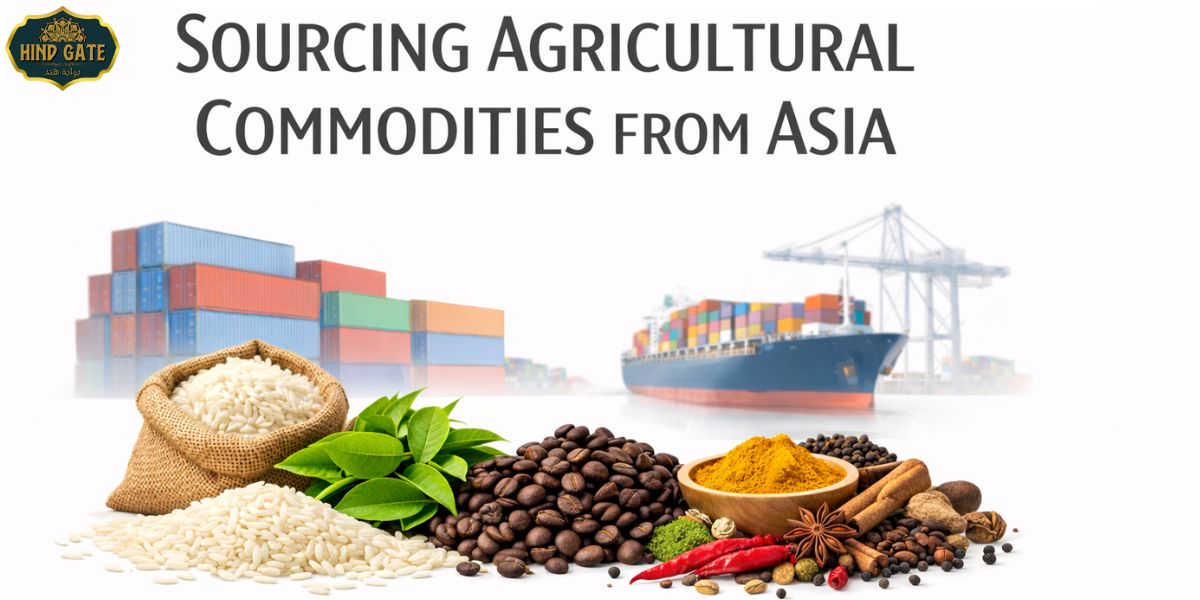
Asia is one of the world’s most important suppliers of agricultural commodities. From rice and spices to tea and coffee, Asian countries play a critical role in feeding global markets. For importers, sourcing agricultural products from Asia offers competitive pricing, product diversity, and reliable supply but only when done with the right knowledge and preparation.
In this guide, we explain what importers should know before sourcing agricultural commodities from Asia, including quality standards, supplier evaluation, logistics, compliance, and market-specific insights. Whether you are a first-time buyer or an established trader, this article will help you make informed sourcing decisions.
Why Asia Is a Key Sourcing Region for Agricultural Commodities?
Asia dominates global agricultural trade due to favorable climates, large-scale farming, and established export ecosystems. Countries like India, Vietnam, Thailand, Indonesia, and Sri Lanka supply major volumes of food commodities worldwide.
Key reasons importers prefer Asia:
- Competitive production costs
- Wide range of commodities and grades
- Strong export infrastructure
- Experience in bulk and containerized shipments
For example, India alone supplies diverse products ranging from types of rice in India to spices, tea, and coffee for more than 150 countries.
Understand Commodity-Specific Differences Before Sourcing
Each agricultural commodity has unique sourcing requirements. Importers must understand these differences to avoid quality or compliance issues.
Rice
Rice sourcing varies by grain length, aroma, processing method, and breakage ratio. Importers supplying the Middle East often focus on basmati and non-basmati varieties used by rice importers in Dubai for both retail and bulk distribution.
- Variety (basmati, non-basmati, parboiled, broken)
- Milling and grading standards
- Moisture and broken percentage
- Packaging suitability for destination markets
Spices
Spices require strict quality control due to contamination risks. Many spice importers in Dubai source directly from Asian origins because of traceability and consistent supply.
Key checks include:
- Purity and oil content
- Cleaning and sterilization processes
- Residue and aflatoxin compliance
How to Evaluate Reliable Asian Suppliers?
Supplier reliability is one of the most critical factors in successful importing.
Before finalizing a supplier, importers should:
- Verify export licenses and certifications
- Request product samples and lab reports
- Check export history and destination markets
- Confirm production capacity and lead times
Additionally, experienced suppliers involved in export rice from india or spice exports usually understand destination-specific regulations, reducing the risk of shipment delays.
Quality Standards and Certifications Matter
Agricultural imports are subject to strict food safety and quality regulations. Importers must ensure suppliers comply with international standards such as:
- ISO and HACCP
- Phytosanitary certification
- Country-specific food safety requirements
Consistent quality is especially important for repeat buyers and institutional clients, including hotels, wholesalers, and distributors.
Documentation and Compliance Requirements
Incorrect documentation is one of the most common causes of shipment delays.
Standard export documents include:
- Commercial invoice
- Packing list
- Certificate of origin
- Phytosanitary certificate
- Bill of lading
Importers sourcing through channels like export rice from india benefit from working with suppliers familiar with destination-country customs procedures, particularly in high-volume markets such as the UAE.
Logistics, Packaging, and Transit Planning
Logistics planning directly affects cost efficiency and product condition on arrival.
Key considerations:
- Bulk vs containerized shipments
- Packaging type (PP bags, jute bags, vacuum packs)
- Transit time and port handling
- Insurance and risk coverage
Dubai plays a strategic role as a re-export hub, which is why many rice importers in UAE source from Asia for redistribution across the Middle East and Africa.
Pricing Transparency and Contract Clarity
Importers should always confirm:
- FOB vs CIF pricing
- Payment terms
- Shipment timelines
- Quality dispute resolution terms
Transparent contracts help build long-term sourcing relationships and reduce commercial risk.
Why Market Knowledge Improves Import Decisions?
Understanding global trade trends gives importers a competitive advantage. For example, demand patterns in regions supplied by the top 10 tea exporting countries influence pricing, availability, and shipment schedules across Asia.
Similarly, importers who already deal in rice often diversify into related commodities such as spices and coffee to optimize logistics and margins.
Common Mistakes Importers Should Avoid
- Choosing suppliers based on price alone
- Ignoring quality certifications
- Inadequate inspection before shipment
- Lack of destination-market compliance knowledge
Avoiding these mistakes helps protect both margins and brand reputation.
Final Thoughts
Sourcing agricultural commodities from Asia offers strong opportunities, but success depends on preparation, supplier evaluation, and market understanding. By focusing on quality standards, compliance, logistics, and reliable partnerships, importers can build sustainable supply chains.
Whether you are sourcing rice, spices, or other food commodities, informed decisions are essential for long-term growth in global agri trade.